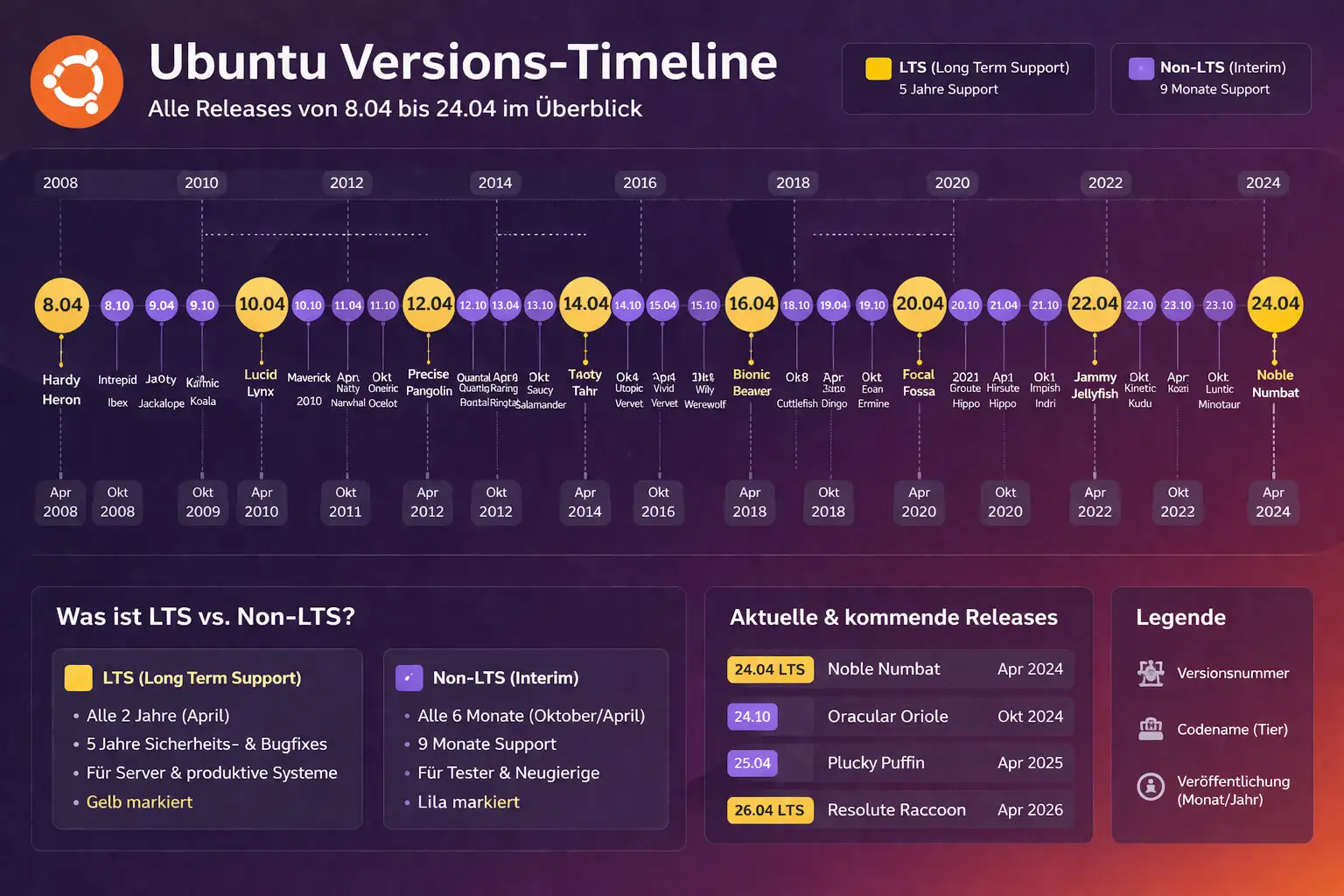
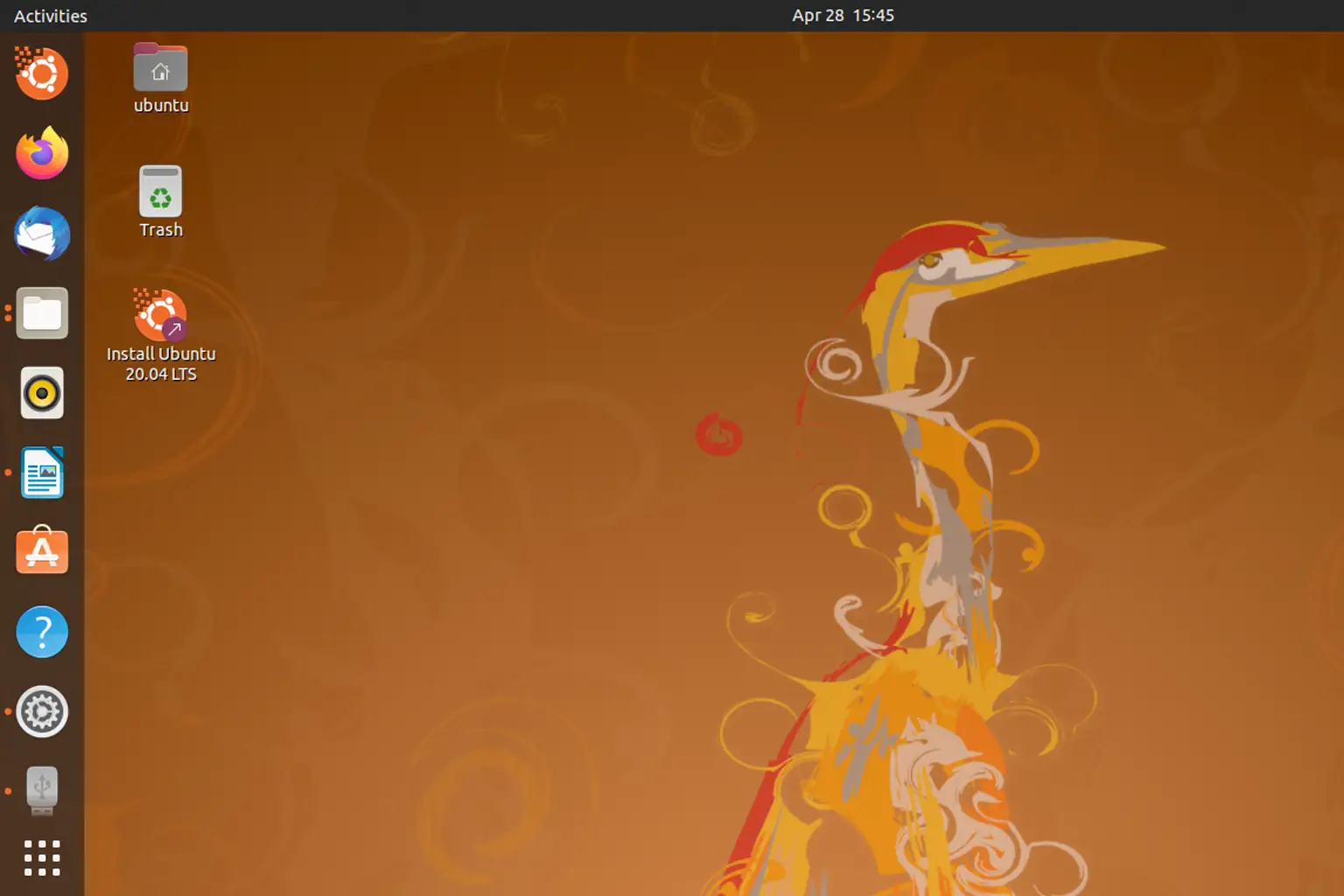
ubuntu-pics.de has existed since the Ubuntu 8.04 era. Back then Hardy Heron was current, GNOME 2 was standard and Unity was still an unknown concept. This page documents Ubuntu's version history from the perspective of someone who actively uses Ubuntu – not as a dry changelog but covering the things that actually affected users.
Ubuntu releases twice a year: in April (xx.04) and October (xx.10). LTS versions appear every two years in April and get 5 years of support. Non-LTS versions get only 9 months of updates – fine for experimenting, not for production machines.
April 2024
Ubuntu 24.04 LTS "Noble Numbat"
Current · Support until 2029
GNOME 46, new Flutter-based App Center, reworked Settings, new installer. Firefox and Thunderbird as Snaps. Kernel 6.8.
Known issues at launch: Some NVIDIA driver issues with Kernel 6.8, new installer occasionally hung on encrypted installs.
April 2022
Ubuntu 22.04 LTS "Jammy Jellyfish"
Support until 2027
GNOME 42, first proper system-wide Dark Mode, Dash-to-Dock integrated as default extension. Firefox switched to Snap. PipeWire replaces PulseAudio.
Known issues: Firefox Snap started noticeably slower than the apt version. Nvidia + Wayland issues for some users.
April 2020
Ubuntu 20.04 LTS "Focal Fossa"
EOL April 2025
GNOME 3.36, significantly improved performance vs. 18.04, new Yaru theme with dark variant, nftables replaces iptables. One of the most popular LTS releases ever.
April 2018
Ubuntu 18.04 LTS "Bionic Beaver"
EOL
The release where Unity was officially retired. Return to GNOME, new Yaru theme, Wayland as optional session. A relief for many users after the Unity era.
April 2008
Ubuntu 8.04 LTS "Hardy Heron"
EOL · Origin of ubuntu-pics.de
GNOME 2.22, Ubuntu as a credible Windows alternative for newcomers. This version was the starting point for ubuntu-pics.de – screenshots from this era often showed OpenOffice.org, Firefox 3 and the classic brown Human theme.
Known issues back then: Wi-Fi drivers for Broadcom and Intel were a constant topic, proprietary GPU drivers needed manual installation. Many things that work automatically today required multiple terminal commands.
Why this archive is still useful
Some users run Ubuntu servers on older versions that haven't been updated for various reasons. For these scenarios, it's helpful to have documented what issues and fixes applied to each version. A fix that works on Ubuntu 20.04 won't necessarily work on 18.04.
Also: Ubuntu's version history shows what Linux desktop development actually feels like in practice. The Unity controversy, the return to GNOME, the gradual rollout of Wayland – these aren't dry release notes but decisions that affected daily work.
More screenshots from various Ubuntu versions are on the screenshots page. Current problem FAQ lives in the FAQ section. For web projects running on Linux, Coding Bonn is worth a look.